

JAKARTA—The Indonesian Chamber of Commerce and Industry (KADIN) has urged the President of the Republic of Indonesia to cancel the planned import of 105,000 pick-up trucks for the operational commercial vehicles of the Merah Putih Village/Sub-district Cooperatives (Kopdes). KADIN believes these imports will weaken the domestic automotive industry, which is actually capable of meeting this need.
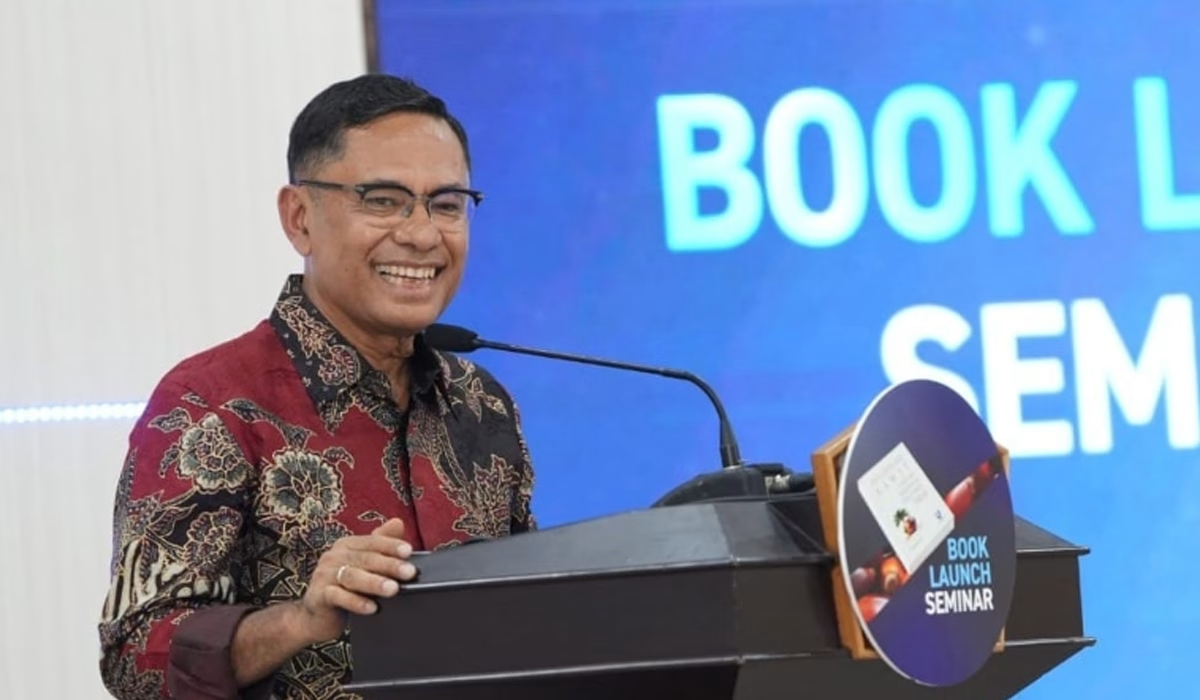
“After receiving views from automotive industry players and associations, we urge the President to cancel the planned import of 105,000 commercial vehicles,” said KADIN Deputy Chairman for Industry, Saleh Husin, in a statement in Jakarta on Sunday, 22 February 2026.
According to KADIN, importing CBU pickup trucks risks stifling the national automotive industry and does not provide a significant boost to the domestic economy. The domestic automotive industry has expressed its readiness to meet the vehicle needs of the Merah Putih Village/Sub-district Cooperative program.
Saleh emphasized that import policies need to be aligned with the government’s industrialization vision, which emphasizes downstreaming, job creation, and increasing added value to the national economy. He emphasized that domestic industrial development must be safeguarded through appropriate regulations. “Importing CBU cars is tantamount to killing the growing automotive industry,” Saleh said.
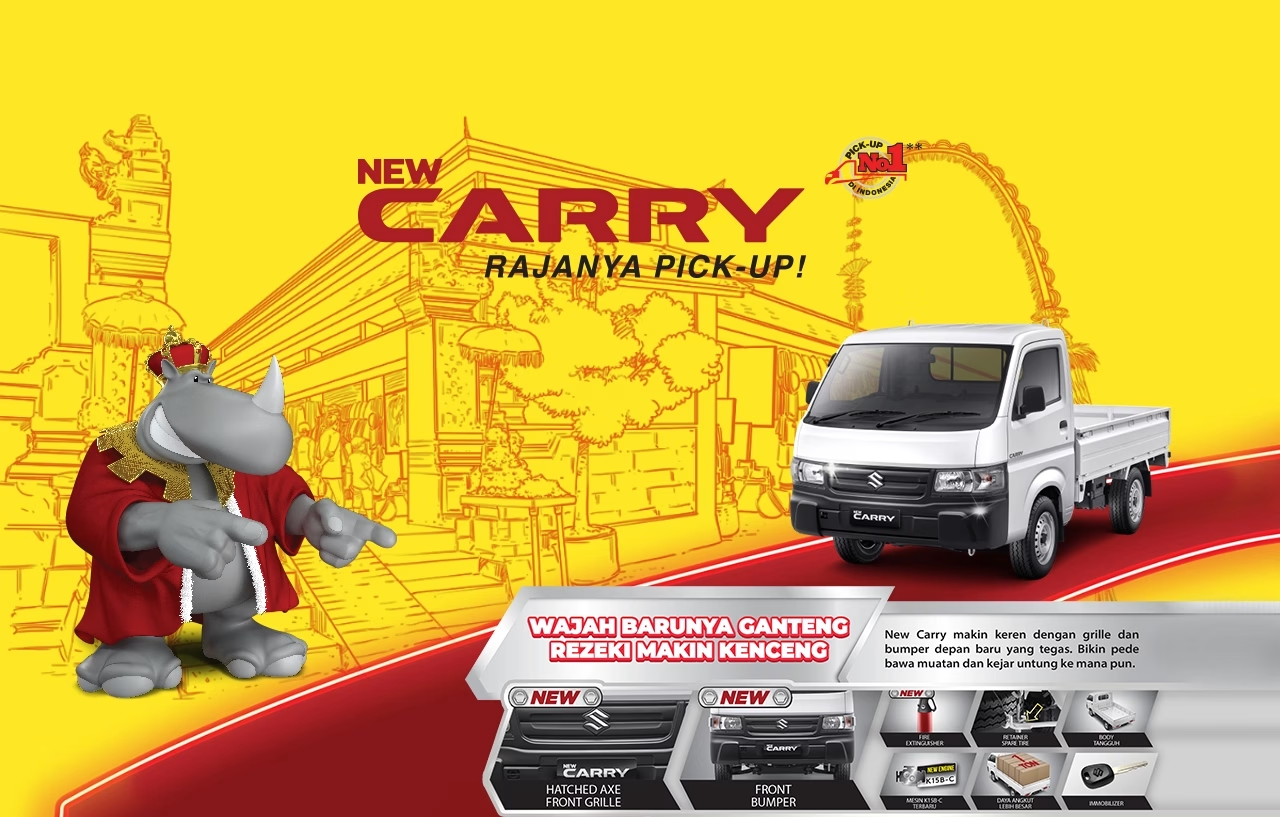
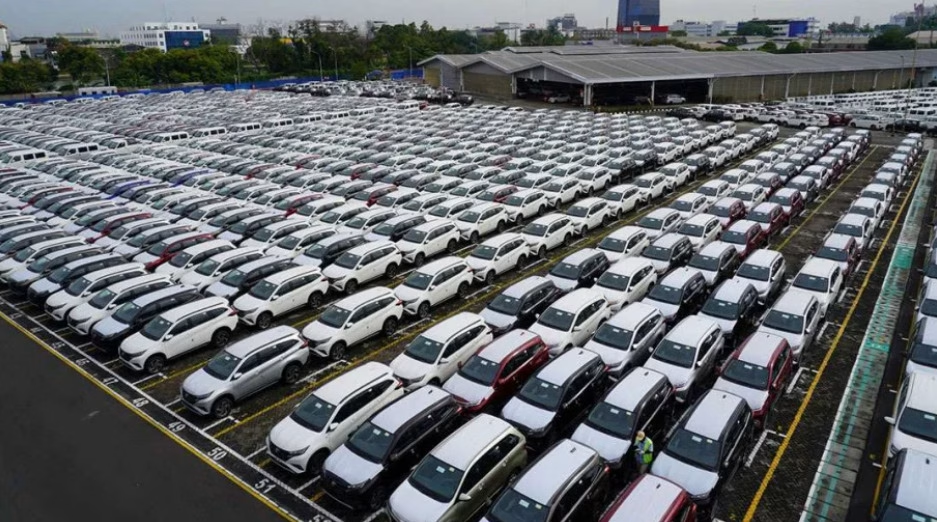
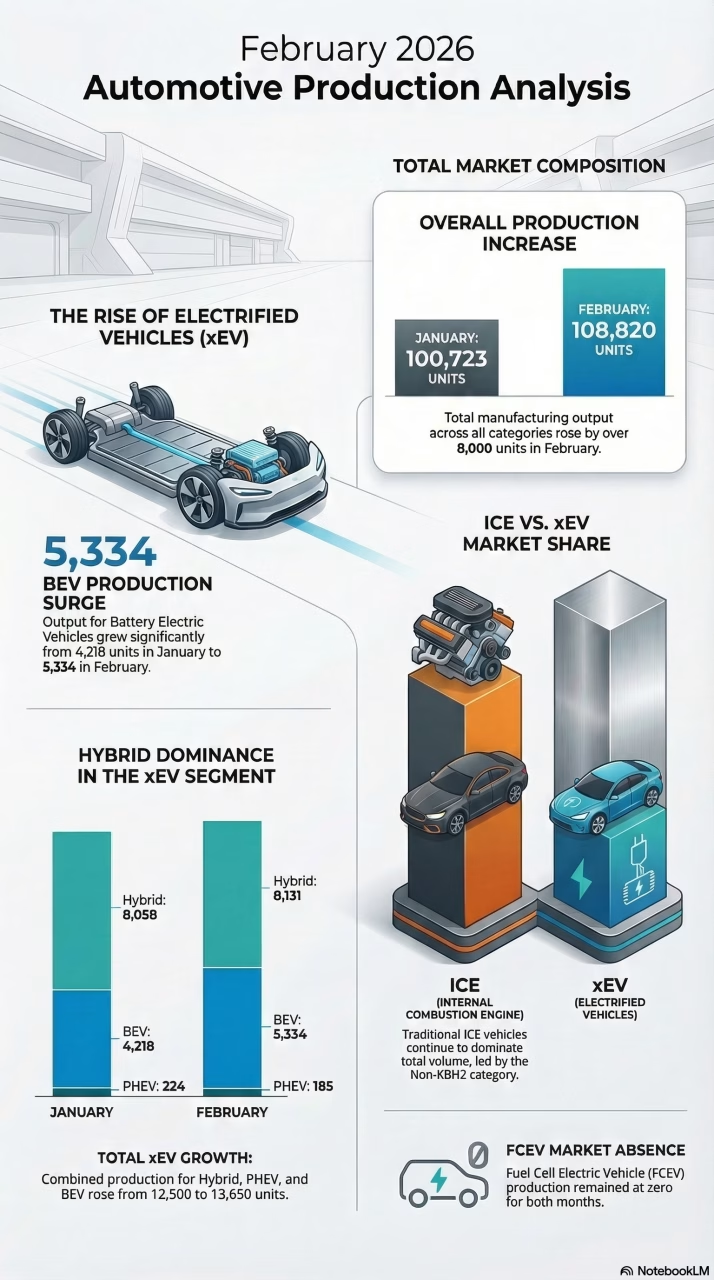
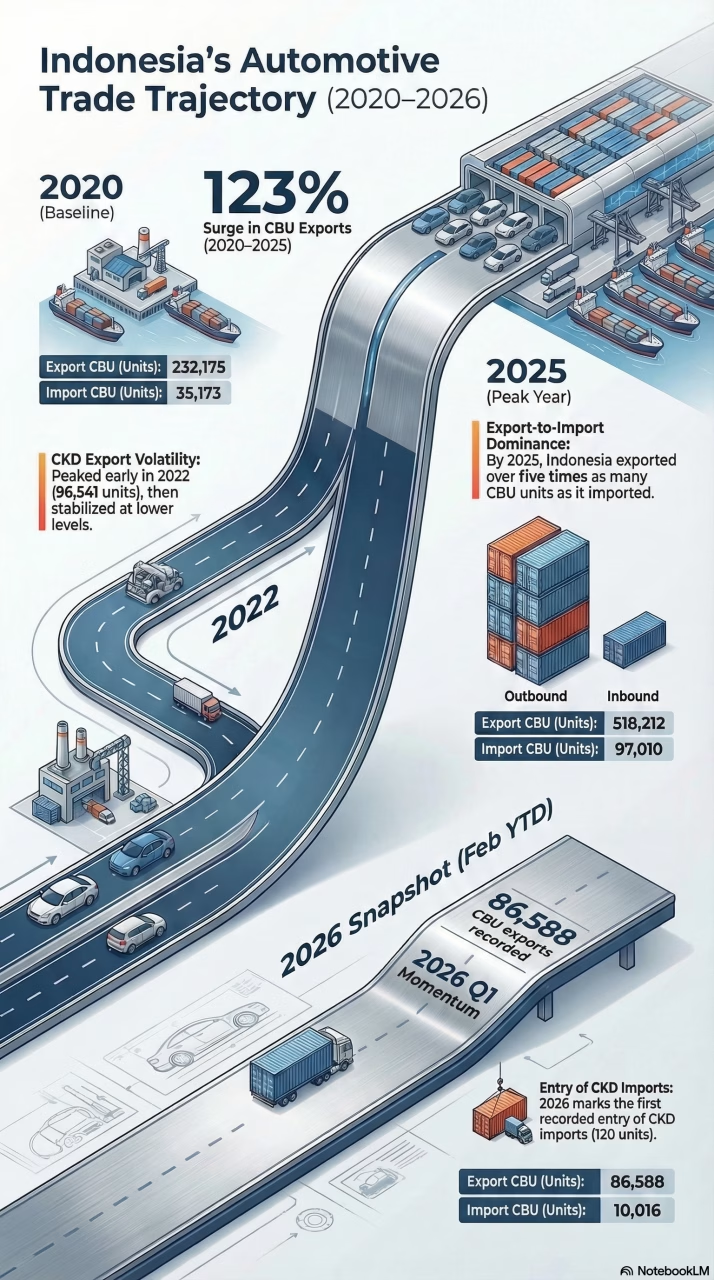
On the other hand, industry players believe that national production capacity is actually quite large. The total national pickup truck production capacity reaches hundreds of thousands of units per year and is not yet optimally utilized, supported by a domestic component content (TKDN) of above 40 percent and an extensive after-sales service network.
KADIN believes the government needs to ensure that trade policies do not operate independently without considering strengthening the domestic industry. He stated that synchronization between relevant ministries is crucial so that village development programs can stimulate the national automotive industry. “However, in terms of industrial policy, the government must remain cautious so that the development of village cooperatives does not actually weaken the utilization of domestic automotive factories,” Saleh said.
The Indonesian Chamber of Commerce and Industry (KADIN) also believes the government has room to design schemes that favor the national industry, such as prioritizing vehicles with high TKDN, encouraging domestic assembly, or establishing local manufacturing partnerships.
PT Agrinas Pangan Nusantara plans to import 105,000 pickup trucks from India to support village cooperative operations. The imports consist of 35,000 4×4 pickup trucks manufactured by Mahindra & Mahindra Ltd. (M&M), 35,000 4×4 pickup trucks from Tata Motors, and 35,000 six-wheeled trucks from the same manufacturer. Vehicle deliveries will be carried out in stages throughout 2026.
Minister of Industry Agus Gumiwang Kartasasmita emphasized that Indonesia’s ability to independently produce pickup trucks demonstrates the independence of the national automotive industry and provides significant added economic value to the economy.
He made this statement in response to the planned import of 105,000 pickup trucks from India for the Merah Putih Village Cooperative. In a statement in Jakarta on Thursday, February 19, 2026, the Minister of Industry explained that if the procurement of 70,000 4×2 pickup trucks were met from domestic production, it would have a backward economic linkage of approximately IDR 27 trillion. (ANTARA)