

JAKARTA— The commercial vehicle industry of Hino Motors Ltd. Japan and its entities in Indonesia is growing stronger. This is being strengthened through increased investment, enhanced local production, and the development of environmentally friendly technologies.
This was conveyed during a meeting between the Deputy Minister of the Ministry of Industry of the Republic of Indonesia, Faisol Riza, and Hino management. These included Satyakam Arya (President & CEO and Member of the Board of Directors of Hino Motors Ltd. HML Japan), Shingo Sakai (President Director of PT Hino Motors Sales Indonesia, HMSI), and Hiroshi Terawaki (President Director of PT Hino Motors Manufacturing Indonesia, HMMI), along with other Hino Indonesia management members.
The meeting discussed the development of the commercial vehicle industry, strengthening Hino’s manufacturing role in Indonesia, and opportunities to make Indonesia a global production and export base. Hino outlined its contribution to the national automotive industry through increased investment and strengthening domestic production capacity.
“Through our extensive service network, spare parts availability, regular maintenance services, and professional technical support, we strive to ensure optimal and productive customer operations across various industrial sectors,” said Shingo Sakai.
To date, Hino’s investment in Indonesia has reached USD 112.5 million. Hino’s factories have a production capacity of up to 75,000 units per year. Furthermore, Hino’s manufacturing activities employ approximately 1,547 workers, which plays a vital role in maintaining the sustainability of the national commercial vehicle industry amidst market dynamics.
In addition to strengthening domestic Japanese production, Hino is also targeting Indonesia as a global commercial vehicle export hub. With the support of increasingly robust local production facilities and supply chains, Indonesia is considered to have significant potential to become a commercial vehicle production base for regional and international markets. Hino hopes this initiative will enhance the competitiveness of the national automotive industry while contributing significantly to the Indonesian economy.
To support increased domestic added value, Hino is also continuously increasing the local content of its products. Currently, Hino’s Domestic Component Level (TKDN) has reached 44.35 percent to 57.26 percent for various vehicle types. In fact, for six vehicle types: the Hino300 Series 115 SD, 136 HD, 136 HDX, 136 MDL, 115SDB, and 115 SDBL, it has reached 71.85 percent. This increase in local content is clear evidence of the strengthening of the national component industry and Hino’s support for the domestic manufacturing ecosystem.
In addition to production, Hino also contributes through human resource development and social responsibility programs. This is done through vocational education programs, laboratory support, and collaboration with various educational institutions to improve the quality of the Indonesian automotive industry workforce.
The government is also encouraging closer collaboration between industry players and stakeholders to accelerate the optimization of national production capacity. With this synergy, the Indonesian automotive industry is expected to continue to grow, become more competitive, and make a greater contribution to the national economy.
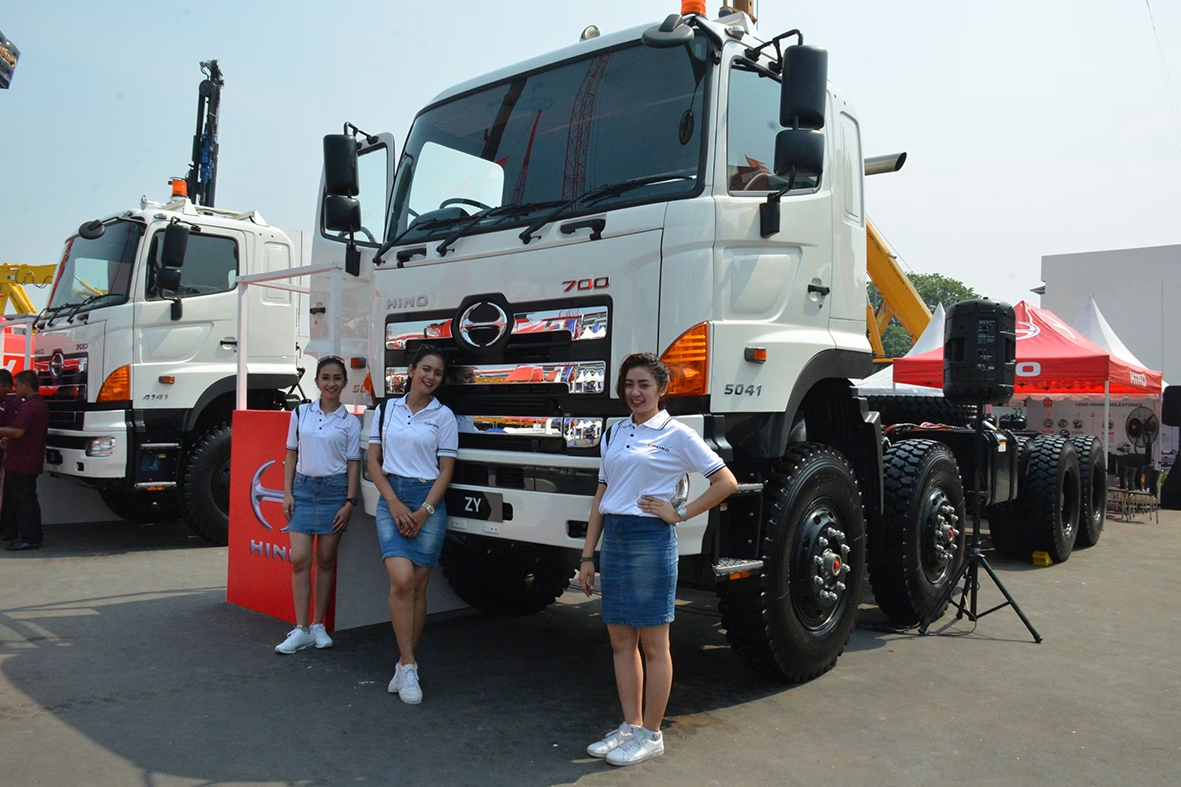
This strategic move further strengthens Hino’s position as a major player in commercial vehicles in Indonesia. In addition to focusing on increasing local production, Hino also ensures comprehensive after-sales support to maintain the performance of customers’ vehicles. (*)