

JAKARTA—The Ministry of Industry (Kemenperin) stated that the Indonesian automotive industry is capable of producing its own pickup trucks domestically. Indonesia’s capacity to produce pickup trucks in large quantities is significant. Domestic car production has the potential to strengthen industrial independence and provide added value to the domestic economy.
Minister of Industry Agus Gumiwang Kartasasmita stated that domestic car production also has a significant economic impact. For example, the procurement of 70,000 units of 4×2 pickup trucks, filled with locally produced products, could have an economic impact (backward linkage) of approximately IDR 27 trillion.
“If pickup trucks are imported, the economic added value and job creation will be enjoyed by foreign industries. However, if they are met by domestic industries, the economic benefits and job creation will be felt domestically,” Agus said in a statement in Jakarta on Thursday, February 19, 2026.
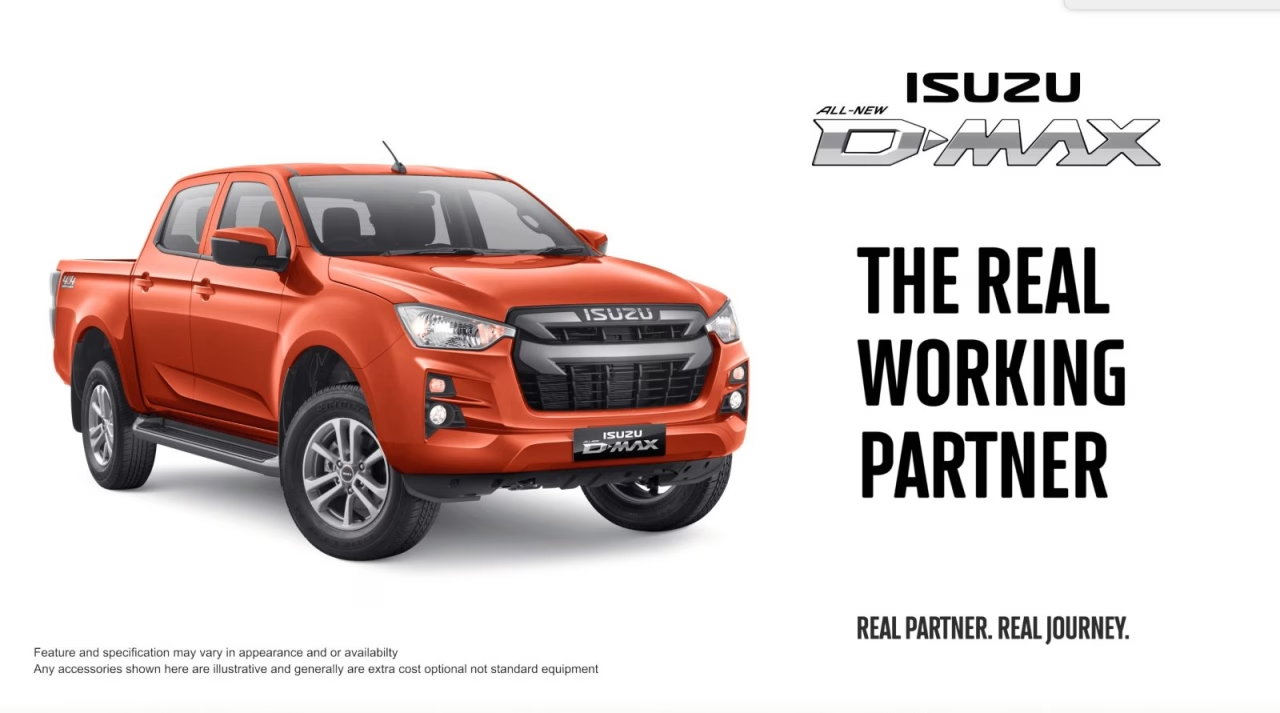
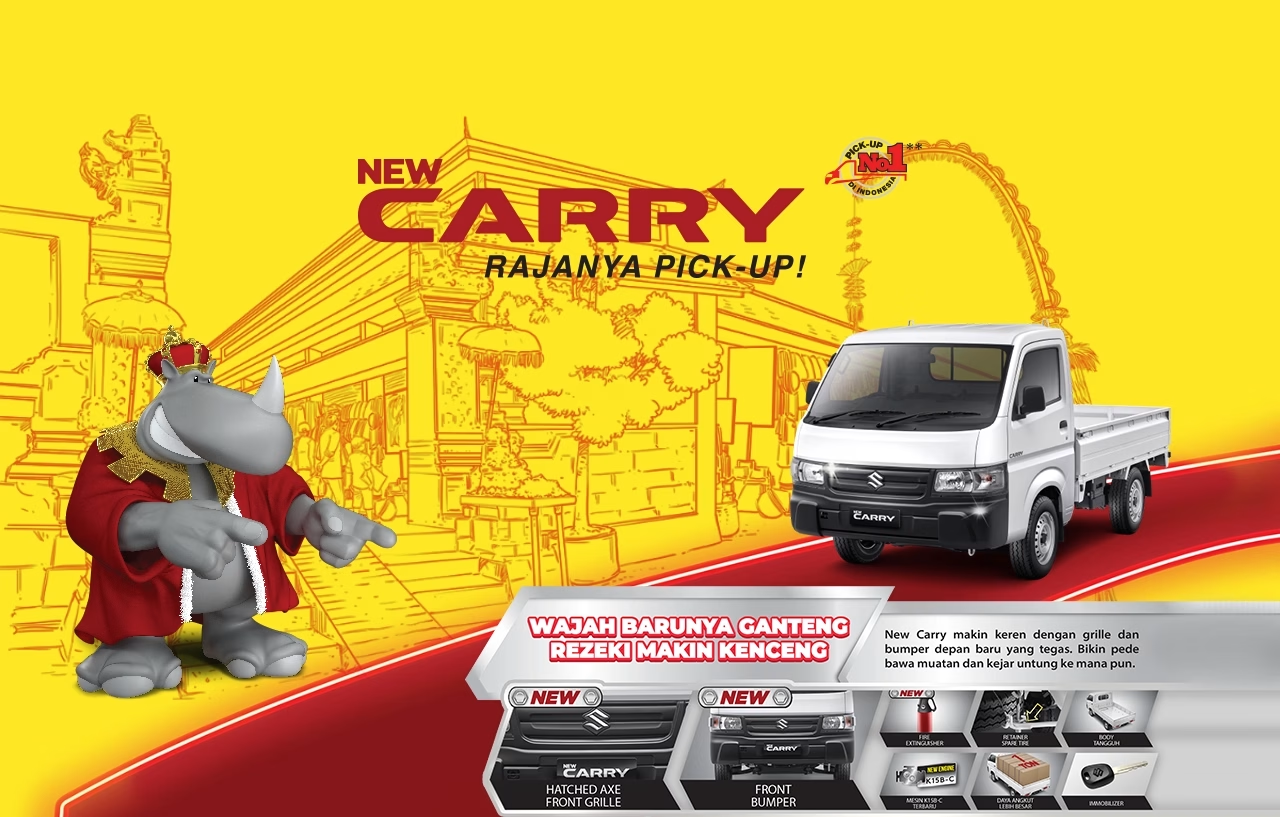
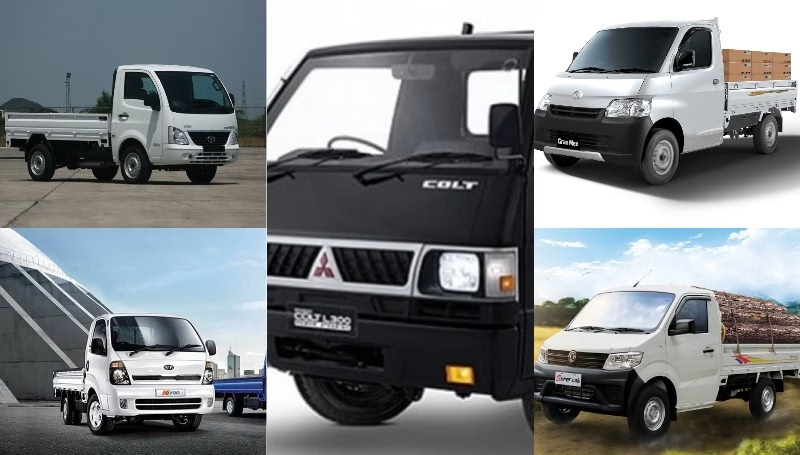
According to him, meeting the demand for pickup trucks through domestic production will boost related subsectors, such as tires, glass, batteries, metal, leather, plastics, cables, and electronics. Currently, the national pickup truck production capacity reaches around 1 million units per year. Several manufacturers producing pickup trucks domestically include PT Astra Daihatsu Motor, PT Isuzu Astra Motor Indonesia, PT Mitsubishi Motors Krama Yudha Indonesia, PT Suzuki Indomobil Motor, PT SGMW Motor Indonesia, and PT Sokonindo Automobile.
With this capacity, the national pickup truck industry is considered capable of meeting domestic market demand while strengthening the competitiveness of the Indonesian automotive industry globally. The standards and quality of domestically produced 4×2 pickup trucks are highly competitive compared to imported products. Local products are also considered capable of meeting operational needs in various regions of Indonesia with diverse road infrastructure conditions, and are well-received by businesses due to their reliable performance for the distribution and mobility of goods.
The development of the commercial vehicle industry is part of the government’s strategy to increase industrial independence and strengthen the national manufacturing structure. The Ministry of Industry is encouraging increased use of domestic components, strengthening the automotive industry supply chain, developing the component industry, and increasing investment and mastery of vehicle manufacturing technology.
The Minister of Industry also urged automotive industry players to maintain workforce stability amidst global and domestic dynamics. He believes that vehicle procurement through imports has the potential to disrupt efforts to maintain industrial sustainability and absorb national labor. The development of the national automotive industry aligns with the direction of President Prabowo Subianto’s industrialization policy, which emphasizes strengthening the domestic industry as a driver of economic growth and increased competitiveness.
“The Ministry of Industry is committed to continuously strengthening the national automotive industry so that it becomes more innovative, competitive, and able to become a key pillar in strengthening the industrial structure and national economic growth,” he said. (*)