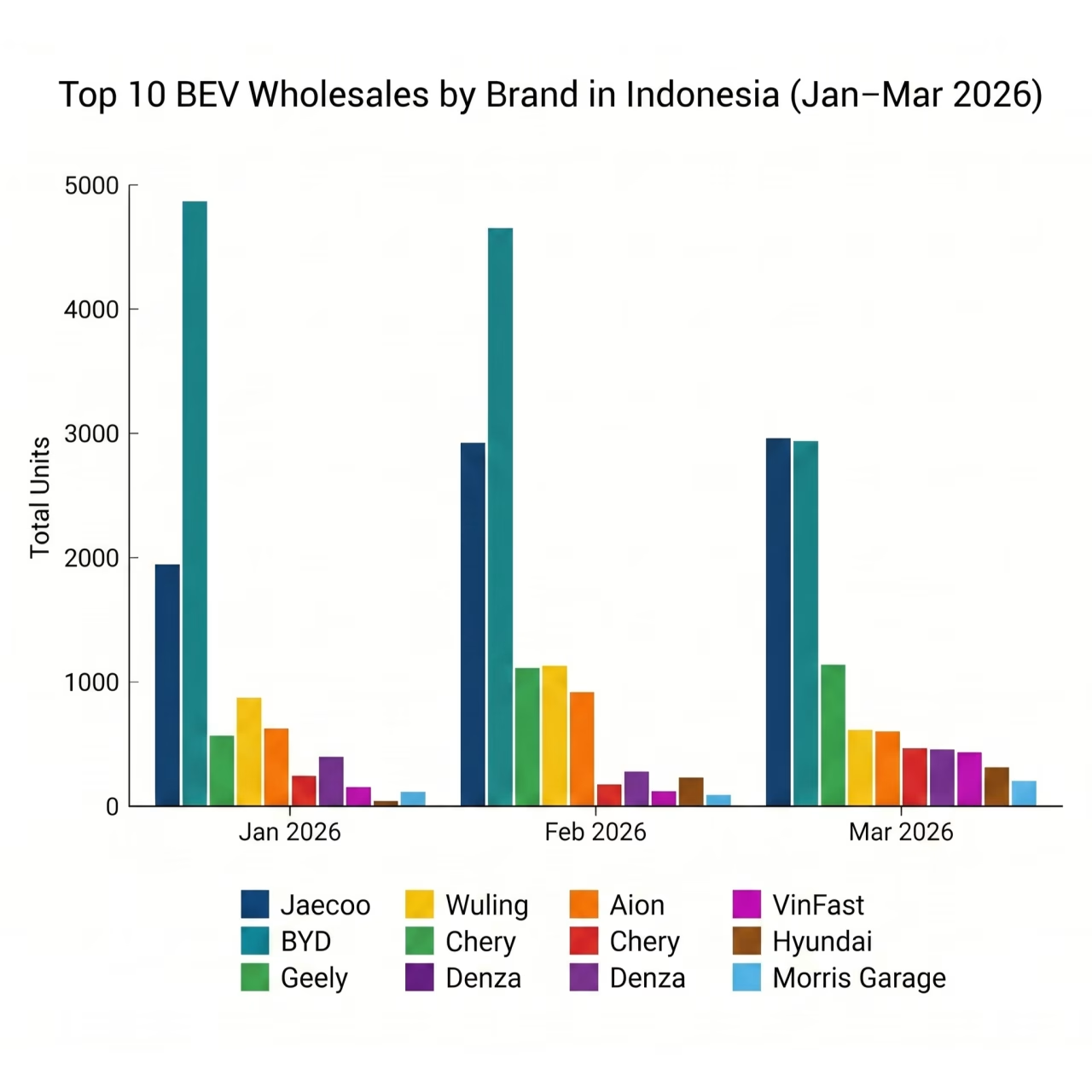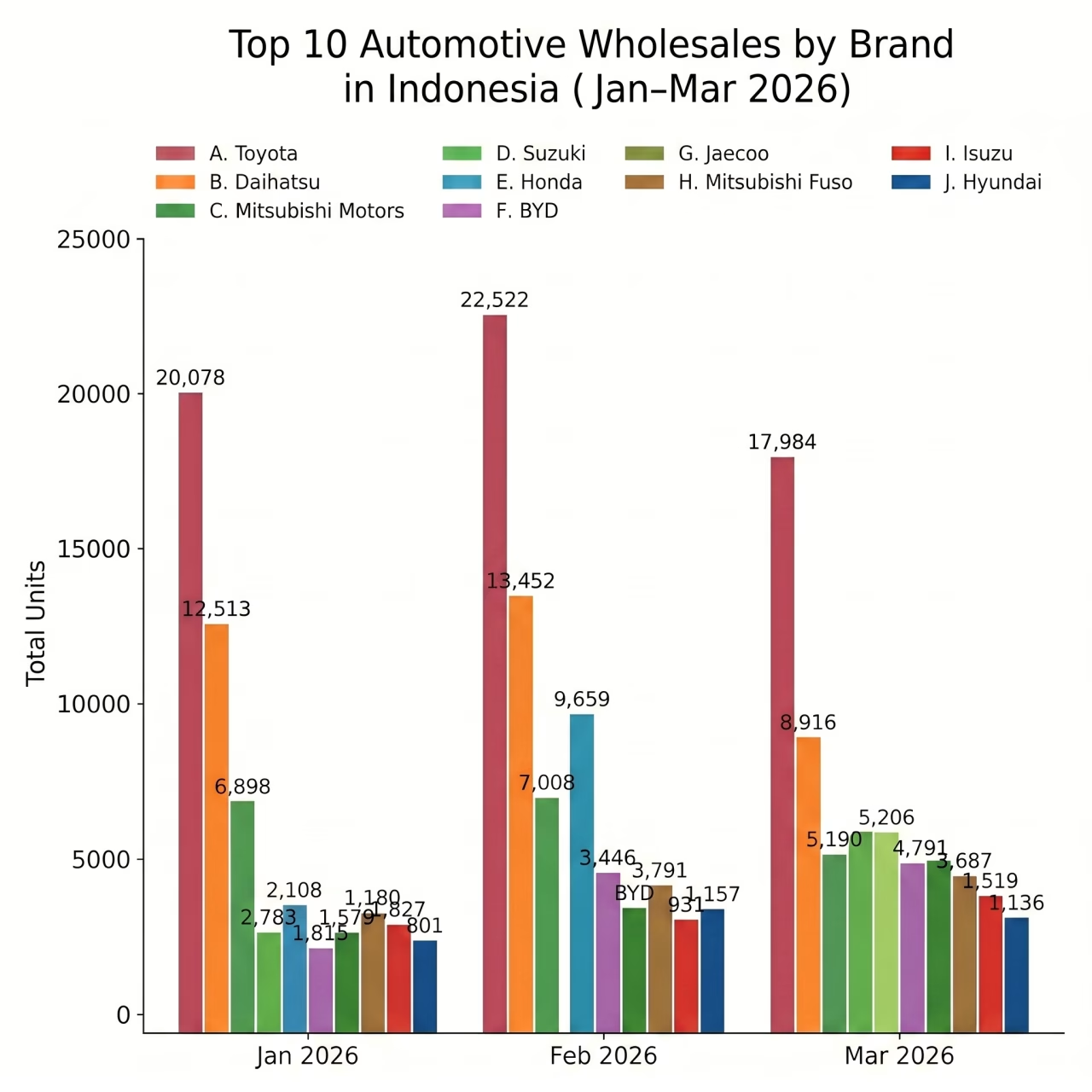


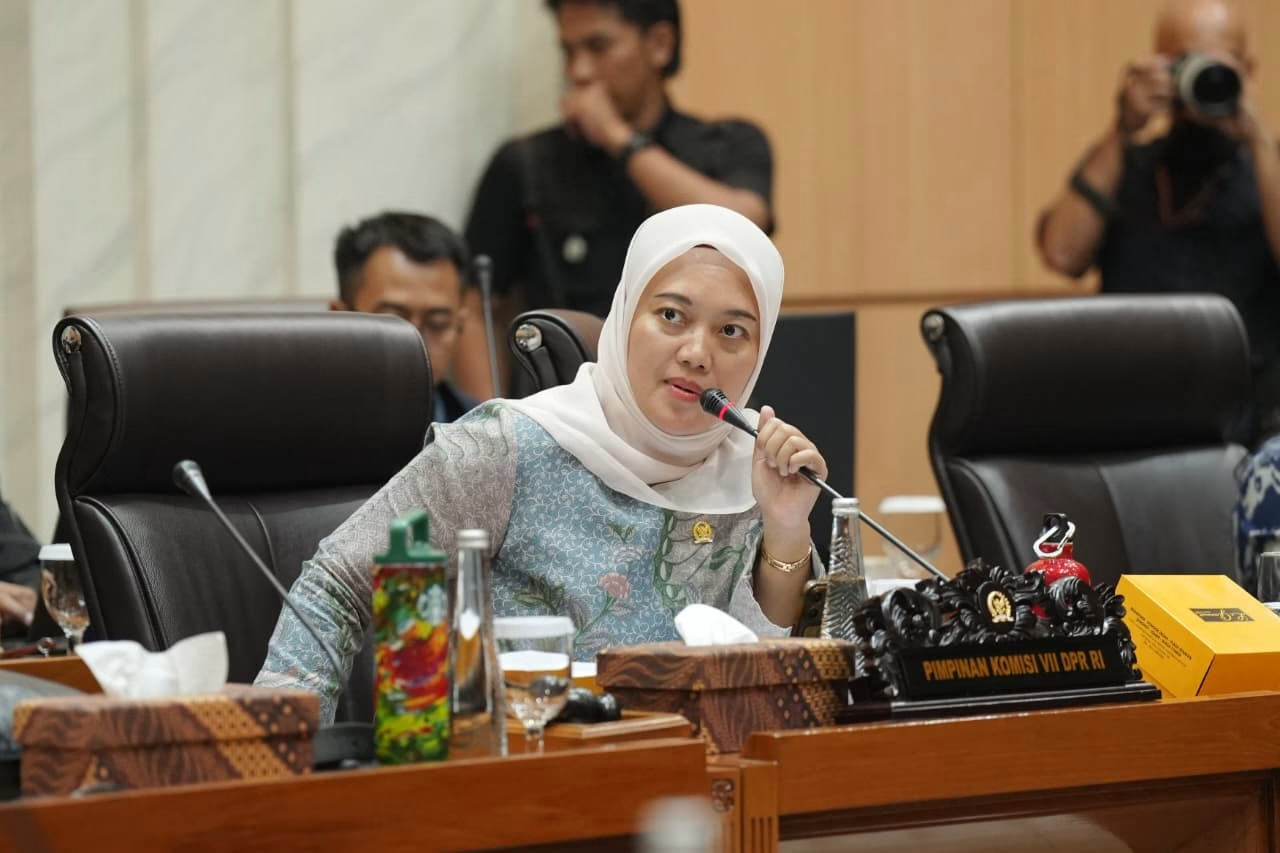
JAKARTA— Deputy Chairperson of Commission VII of the Indonesian House of Representatives (DPR RI), Chusnunia Chalim, believes the booming sales of Chinese-made electric cars in Indonesia must meet national interests. They must meet the Domestic Component Level (TKDN) requirements.
The regulations regarding the Local Component Level (TKDN) for electric cars are stipulated in Presidential Regulation (Perpres) Number 79 of 2023 on Amendments to Presidential Regulation Number 55 on the Acceleration of the Battery-Based Electric Motor Vehicle Program for Road Transportation. This is also regulated in Minister of Industry Regulation (Permenperin) Number 29 of 2017.
Compliance with the TKDN is in line with the target number of battery-based electric vehicles (EVs) in Indonesia by mid-2025, which has reached more than 274,000 units, the majority of which are motorcycles. This sales growth is a positive signal for the acceleration of the energy transition. Specifically for electric cars, sales had reached 82,525 units by November 2025.
The presidential regulation stipulates that the local content content (TKDN) for locally produced electric cars must reach 40 percent by 2022-2026. This will then increase to 60 percent by 2027-2029 and 80 percent starting in 2030. “Despite their popularity, Chinese products still often use imported components. This has sparked discussions about relaxing regulations for the sake of investment versus the urgency of industrial localization,” he said.
He also stated that policy flexibility regarding TKDN is a double-edged sword; it can attract investment but risks slowing down the local component industry. “We must jointly monitor and encourage the government to demand that Chinese EV manufacturers (such as BYD) fulfill their promises to meet the 40 percent TKDN requirement to receive incentives,” he said.
He believes that equally important is how long-term industrial policies continue to emphasize TKDN localization to build the resilience of the national automotive industry. However, electric vehicles (EVs) are the future of the national industry, focused on achieving energy independence, reducing pollution, and strengthening economic competitiveness through an integrated battery ecosystem. “The future success of this industry depends on collaboration between the government and the private sector in building a sustainable ecosystem, from upstream to downstream,” he said. (SINPO)